
Return of Elms

American Elm, Massachusetts Avenue, Cambridge, MA, 2023
![American Elm [Massachusetts Avenue #5, view #2, departed], 2023](https://images.squarespace-cdn.com/content/v1/65721ce7e57dfc0ba17e6e58/ddaad97b-cac1-406a-b316-f4afe7a9cc9d/02_American+Elm+%5BMassachusetts+Avenue+%235%2C+view+%232%2C+departed%5D.jpg)
American Elm [Massachusetts Avenue #5, view #2, departed], 2023

Privately owned American Elm, Ash Street Place, Cambridge, MA, 2023
![American Elm [view from the back porch], Cambridge, MA, 2023](https://images.squarespace-cdn.com/content/v1/65721ce7e57dfc0ba17e6e58/9c2237c6-b650-472e-9157-aec58a244f87/05_BackYardElm.jpg)
American Elm [view from the back porch], Cambridge, MA, 2023

Back Yard Elm, Cambridge, MA, 2023
![Big Old Elm [departed], Back Bay, Boston, MA, 2023](https://images.squarespace-cdn.com/content/v1/65721ce7e57dfc0ba17e6e58/375d87db-a83d-4686-9236-e1d85e9fbae5/06_BigOldElm_01%5B2400px%5D.jpg)
Big Old Elm [departed], Back Bay, Boston, MA, 2023
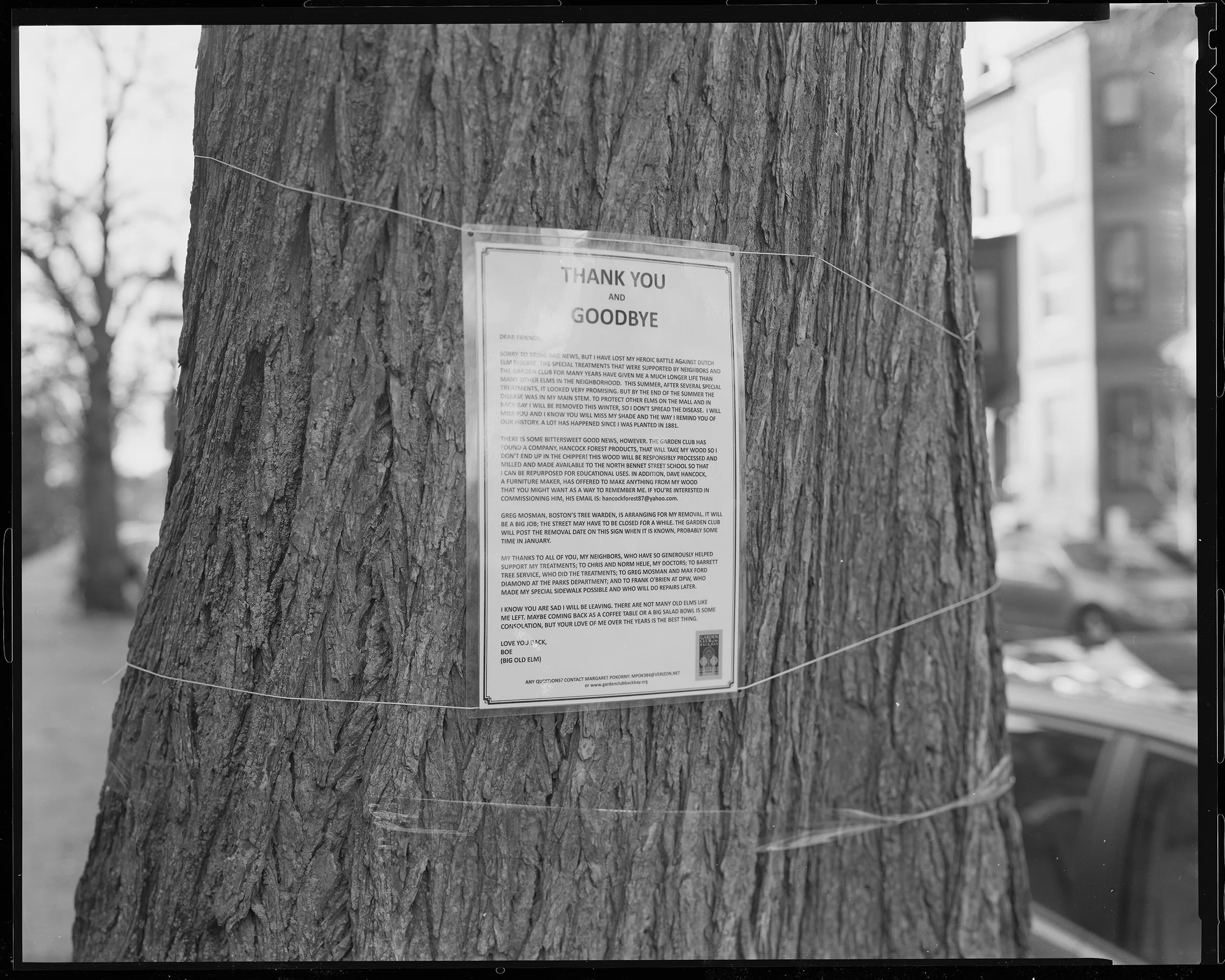
Big Old Elm, Back Bay, Boston, MA, 2023

Big Old Elm, Back Bay, Boston, MA, 2023
![American Elm [girdling of the tree, departed], Boston Common, Boston, MA, 2023](https://images.squarespace-cdn.com/content/v1/65721ce7e57dfc0ba17e6e58/4c6e74c6-1ad9-43b6-9bb1-642d562f918c/08_Boston+Common+Elm+%5Bgirdling+of+the+tree%2C+departed%5D.jpg)
American Elm [girdling of the tree, departed], Boston Common, Boston, MA, 2023
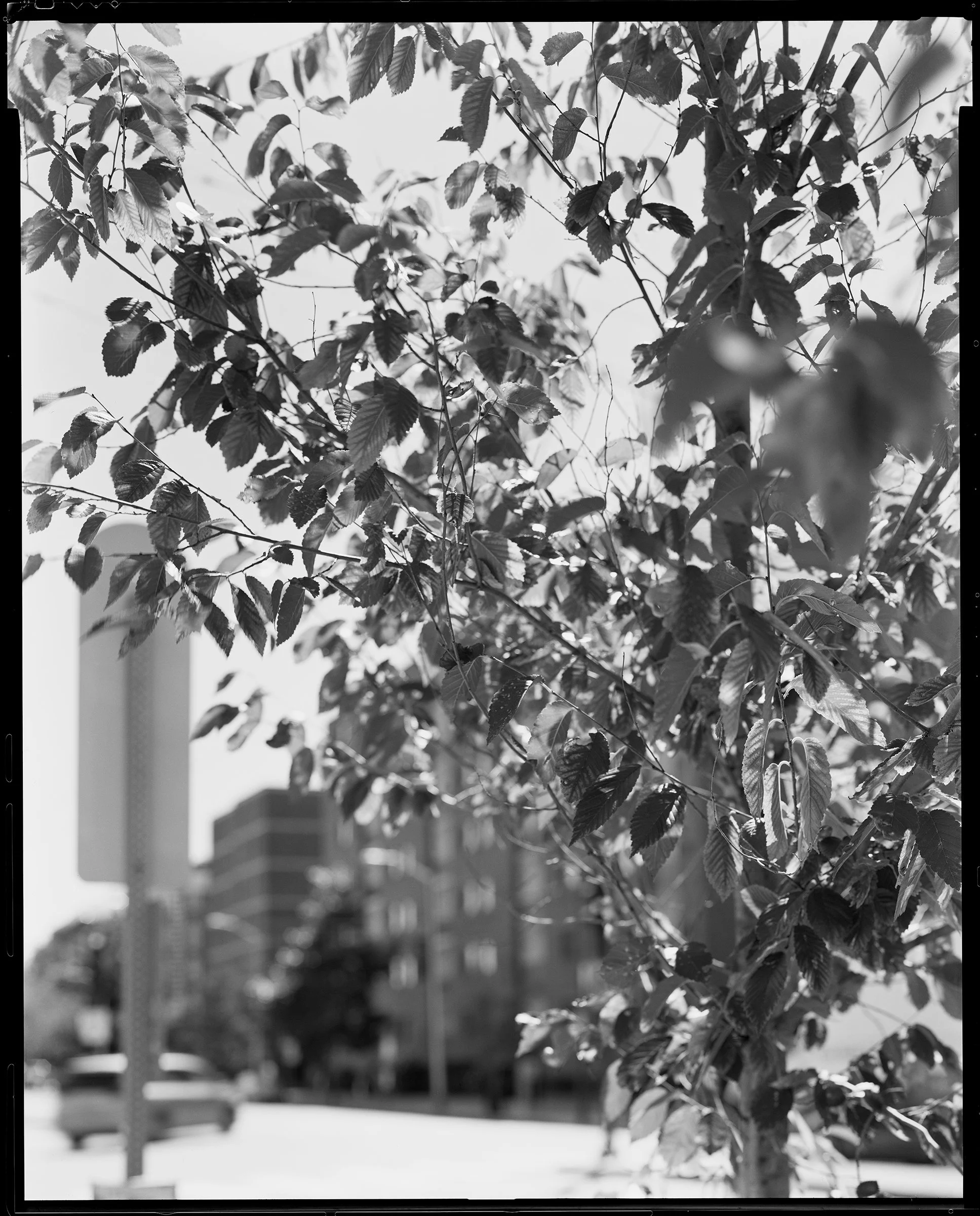
Young Elm, Massachusetts Avenue, Cambridge, MA, 2023
![American Elm [Massachusetts Avenue #4], Cambridge, MA 2023](https://images.squarespace-cdn.com/content/v1/65721ce7e57dfc0ba17e6e58/8fc84c31-3f60-4f65-a76b-f7940b20f674/11_American+Elm+%5BMassachusetts+Avenue+%234%2C+departed%5D.jpg)
American Elm [Massachusetts Avenue #4], Cambridge, MA 2023
![American Elm [Massachusetts Avenue #4, view 2, departed], Cambridge, MA, 2023](https://images.squarespace-cdn.com/content/v1/65721ce7e57dfc0ba17e6e58/c0a6838a-368e-4b25-ad01-06adaa5d569f/12_MassAveElm_04b%5B2400px%5D.jpg)
American Elm [Massachusetts Avenue #4, view 2, departed], Cambridge, MA, 2023
![Allée of Elms [Cambridge Common, Cambridge, MA], 2023](https://images.squarespace-cdn.com/content/v1/65721ce7e57dfc0ba17e6e58/a7e448ce-6041-47fb-9c34-f99112e7db55/14_CambridgeCommon_02%5B2400px%5D.jpg)
Allée of Elms [Cambridge Common, Cambridge, MA], 2023
![American Elm on Hammond Street, [departed], Cambridge, MA 2023](https://images.squarespace-cdn.com/content/v1/65721ce7e57dfc0ba17e6e58/c1d8e66b-94e7-4062-87f1-55c25e82d987/16_Elm_on_Hammond_2%5B2400px%5D.jpg)
American Elm on Hammond Street, [departed], Cambridge, MA 2023
![American Elm [Gorham Street, view #1], 2023](https://images.squarespace-cdn.com/content/v1/65721ce7e57dfc0ba17e6e58/a21e4c5b-b408-44d9-95db-f5ace3d94439/17_GorhamStreetElm_02.jpg)
American Elm [Gorham Street, view #1], 2023
![Boston Common Elm [with tourists], 2017/2023](https://images.squarespace-cdn.com/content/v1/65721ce7e57dfc0ba17e6e58/2d4f4d53-c3be-4c6f-bd21-b16cf06786fd/13_BostonCommonElm_01%5B2400px%5D.jpg)
Boston Common Elm [with tourists], 2017/2023
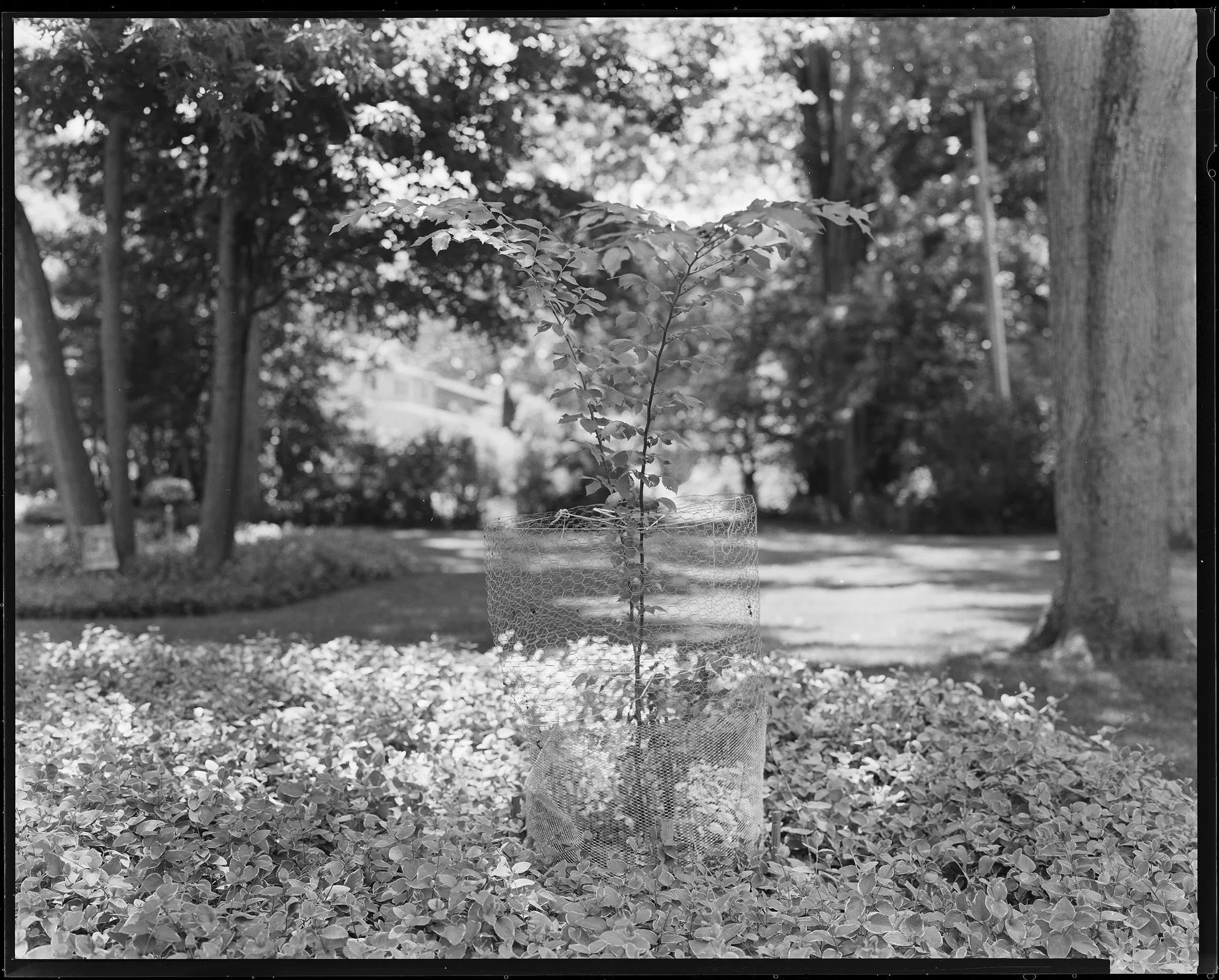
American Elm Sapling, Chili, NY, 2023
![Sapling [Cambridge Common, view 1]](https://images.squarespace-cdn.com/content/v1/65721ce7e57dfc0ba17e6e58/c519dac7-7c23-4460-a076-cc860594fe32/19_Sapling%5BCambridge+Common+Elm%2C+view+1%5D.jpg)
Sapling [Cambridge Common, view 1]
![Privately Owned American Elm [Middlesex Street, Cambridge, MA] 2023](https://images.squarespace-cdn.com/content/v1/65721ce7e57dfc0ba17e6e58/07fc487c-bf3f-4ac7-bbfa-48421faeced6/20_PrivateElmMiddlesexStreet.jpg)
Privately Owned American Elm [Middlesex Street, Cambridge, MA] 2023
“Fate of the Elms” investigates the role of American Elm trees in the history of the United States, from the Revolutionary War to the reintroduction of disease-resistant cultivars in cities across the region. The project is composed of three parts: “The Washington Elm,” photographs of the Washington Elm on Cambridge Common in Massachusetts; “Under these trees…” which depicts the other scions, clones, and seedlings from the Washington Elm across the country, as well as documenting artifacts made from the original tree; and “Return of Elms,” which documents contemporary efforts to reintroduce the now-endangered elms back into the American landscape.
I began photographing historical monuments around Cambridge and Boston in 2006 with a large format camera. While walking on Cambridge Common, I noticed a granite marker: “Under this tree, Washington first took command of the American Army, July 3rd, 1775.” This elm, while majestic, was too young to have been alive at the time of the Revolutionary War. A tree, especially one connected to historical events, is like a photograph: a time traveler with roots in the past and leaves in the present. It was this experience that prompted my research into American Elms.
My photographic work is an effort to examine natural history in relation to cultural history: to visualize the unseen, to remake, revive, or bolster the connection to histories, both material and mythic, that are receding from view. This part of the larger project invites viewers to consider how trees are represented within the built environment. The desire to connect to history and memorialize is one reason we mark landscapes with physical mementos. Trees thus function as objects that last beyond our lives, like markers or monuments, and as living beings that witnessed our history. "Return of Elms" documents the everyday recording of time and the trees that witness our lives.
For “Return of Elms,” I have returned to hand-processed 8 x 10-inch B&W film, but post-processing is all digital; I do my own scanning and printing. The prints are 24 x 30 inches on 30 x 36 inch Canson Infinity Platine 310 gsm. A grant from the Puffin Foundation is making future photographs possible.