New website for Fate of the Elms
Today, I launched the website for my documentary film, Fate of the Elms: Myth, Memory, and the American Elm, currently in pre-production.
I am extending my still photography project into a feature-length documentary, incorporating all three aspects of the photographic series: The Washington Elm, Under These Trees, and Return of Elms. Below is my current statement about the film, including how I am thinking about it, and what I would like the film to accomplish. http://www.fate-of-the-elms.com
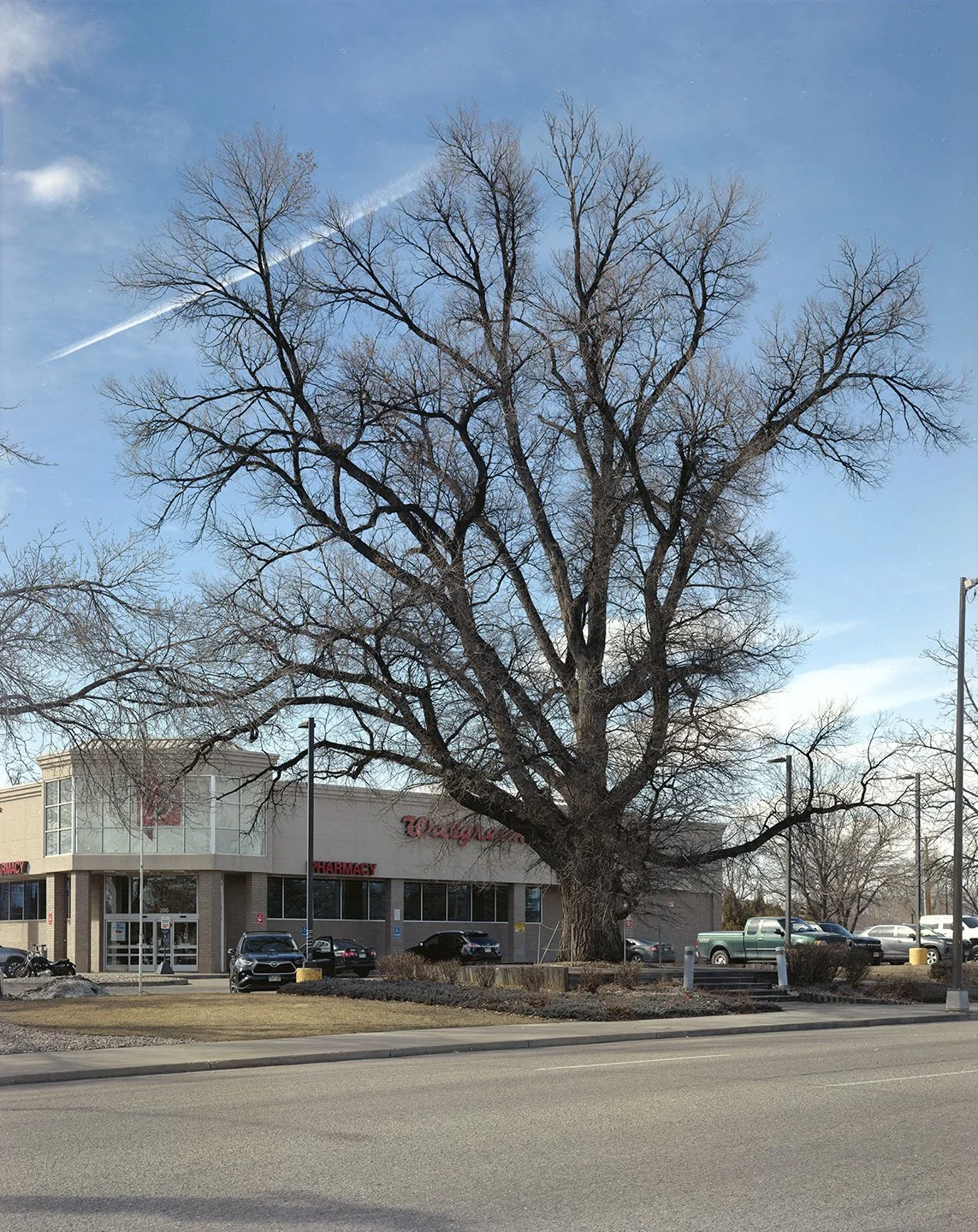
A Washington Elm, Loveland, Colorado, 2023
My work has always focused on how landscape and history intersect. "Fate of the Elms" begins as an investigation into how urban development and environmental stressors collide with the myths we tell ourselves about the land and its history. For a long time, the story of the Washington Elm centered on a single revolutionary moment in 1775. Still, scientific evidence, confirmed by counting the rings of the fallen tree, reveals a much younger Elm that struggled to survive amid the rapid industrialization of Cambridge. I am interested in the tension between that legend and the actual physical cost of progress, such as the trolley tracks and soil compaction, or the well-intentioned city workers who unintentionally toppled the tree in 1923.
In my filmmaking process, I view the participants and the environment as collaborators. I have learned to let the subject’s own presence guide the story rather than imposing my preconceived notions on the material. This commitment to honesty is also reflected in my workflow. I do research to connect archival data, scientific curiosities, and histories to the contemporary landscape. This methodology enables me to efficiently manage the extensive data collected from sources such as Google Maps, Flickr archives, and the GPS coordinates frequently associated with online photographs. This allows me to streamline a complex research process into the film’s pre-production phase, scheduled for this summer.
Ultimately, I want this film to show that the American Elm is still very much alive through its genetic clones, disease-resistant cultivars, fungicide use, and the ongoing science of arboriculture. It is also an opportunity to look beyond the revolutionary myth of Washington taking command of the Army. To bring forward the history of the Massachusett people who stewarded this land for thousands of years before the legend was born, and revered the American Elm as a council tree. By documenting these trees—the Washington Elm, its descendants nationwide, the artifacts crafted from it, and the street trees of Cambridge—I am investigating the methods by which we conserve a species and uphold living legacies in a world that has undergone profound transformations since the initial graft was taken.